
Ask how long exterior paint lasts, and you’ll usually hear a number—5 years, maybe 10 if you’re lucky.
Around Wilkes-Barre and the surrounding NEPA region, that kind of answer only tells part of the story.
Because here, paint doesn’t age on a simple timeline. It responds to everything happening around it—weather swings, moisture levels, sun exposure, even how your home is positioned on the lot. Two homes painted the same year can look completely different just a few seasons later.
What “Lasting” Actually Means on a Local Home
When homeowners ask how long paint lasts, they’re usually thinking about when it fails. Peeling, cracking, bare spots.
But most paint jobs in NEPA don’t fail all at once. They transition through stages:
- Year 1–3: Color holds strong, surface looks clean and uniform
- Year 4–6: Slight fading begins, especially on sun-facing sides
- Year 6–10: Subtle wear shows—chalkiness, minor separation, reduced protection
- Beyond that: Visible breakdown depending on exposure and prep quality
The key point: by the time paint “looks bad,” it’s often been losing protection for a while.
Why NEPA Weather Speeds Up the Process
Northeast Pennsylvania creates a unique environment for exterior surfaces.
You’re not just dealing with one type of stress—you’re dealing with all of them, often within the same week.
- Freeze-thaw cycles in late winter and early spring
- High humidity through summer
- Heavy rain and snow exposure
- Strong UV during clear, cooler days
Drive through areas near Harveys Lake or up into Dallas, and you’ll notice how homes exposed to open sun age differently than those tucked under tree cover.
Both have their own challenges—and both affect how long paint lasts.
Location on Your Home Matters More Than You Think
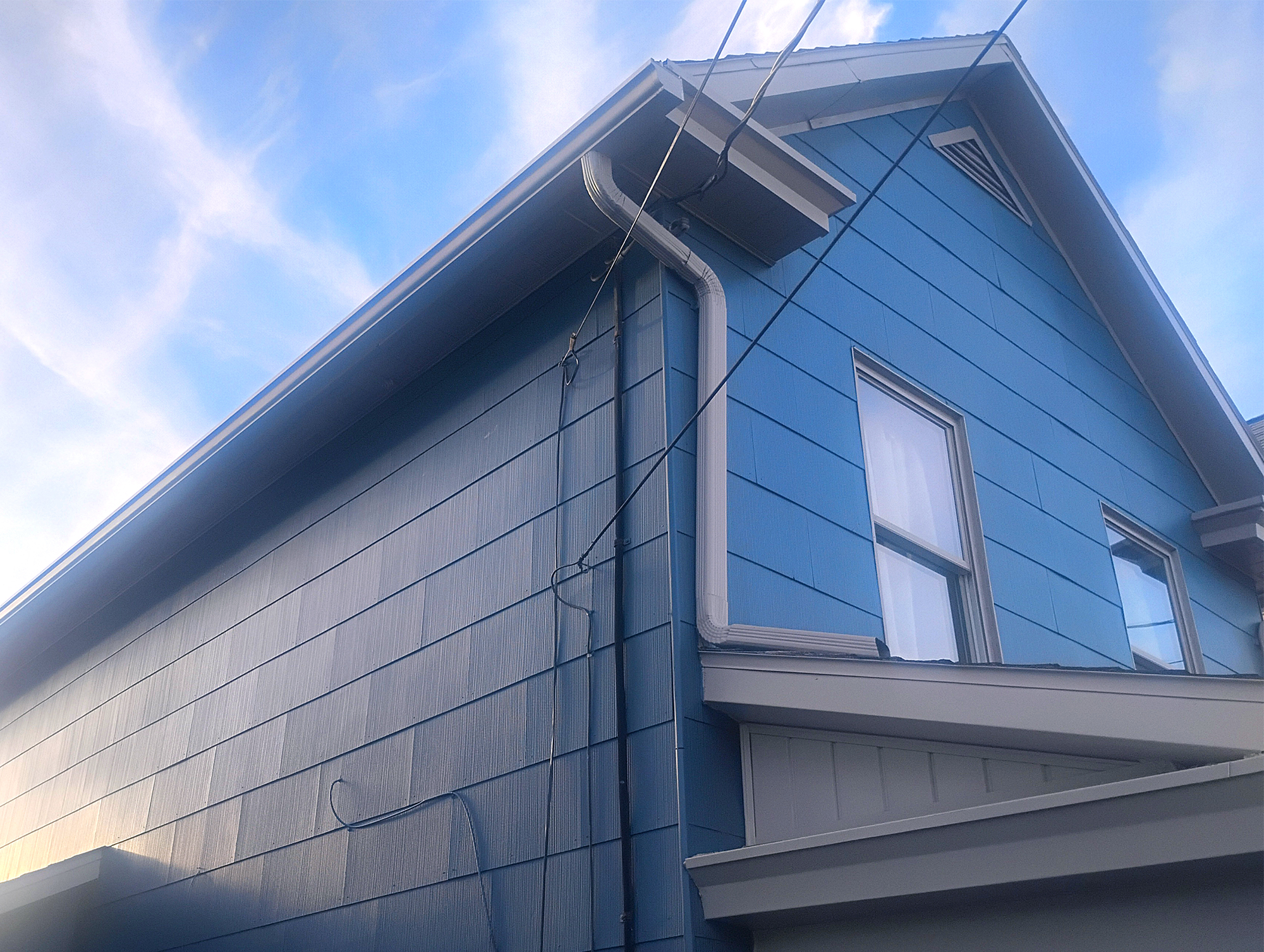
Not all sides of your home age equally. In fact, one side can look nearly new while another is already wearing down.
Typical wear patterns in NEPA:
- South/West-facing sides:
More sun exposure → faster fading and drying - North-facing sides:
Less sun → more moisture retention → higher chance of mildew or slower drying - Tree-covered areas (common in Back Mountain & Poconos edges):
Extended dampness → gradual paint breakdown
This uneven aging is why a blanket “lifespan” number rarely tells the full story.
Material Plays a Big Role Too
The surface under the paint has a major influence on how long it holds up.
|
Surface Type |
Typical Performance in NEPA |
|
Wood Siding |
Beautiful, but more maintenance over time |
|
Vinyl |
Holds color longer, but can fade with UV |
|
Fiber Cement |
More stable, longer lifespan with proper prep |
|
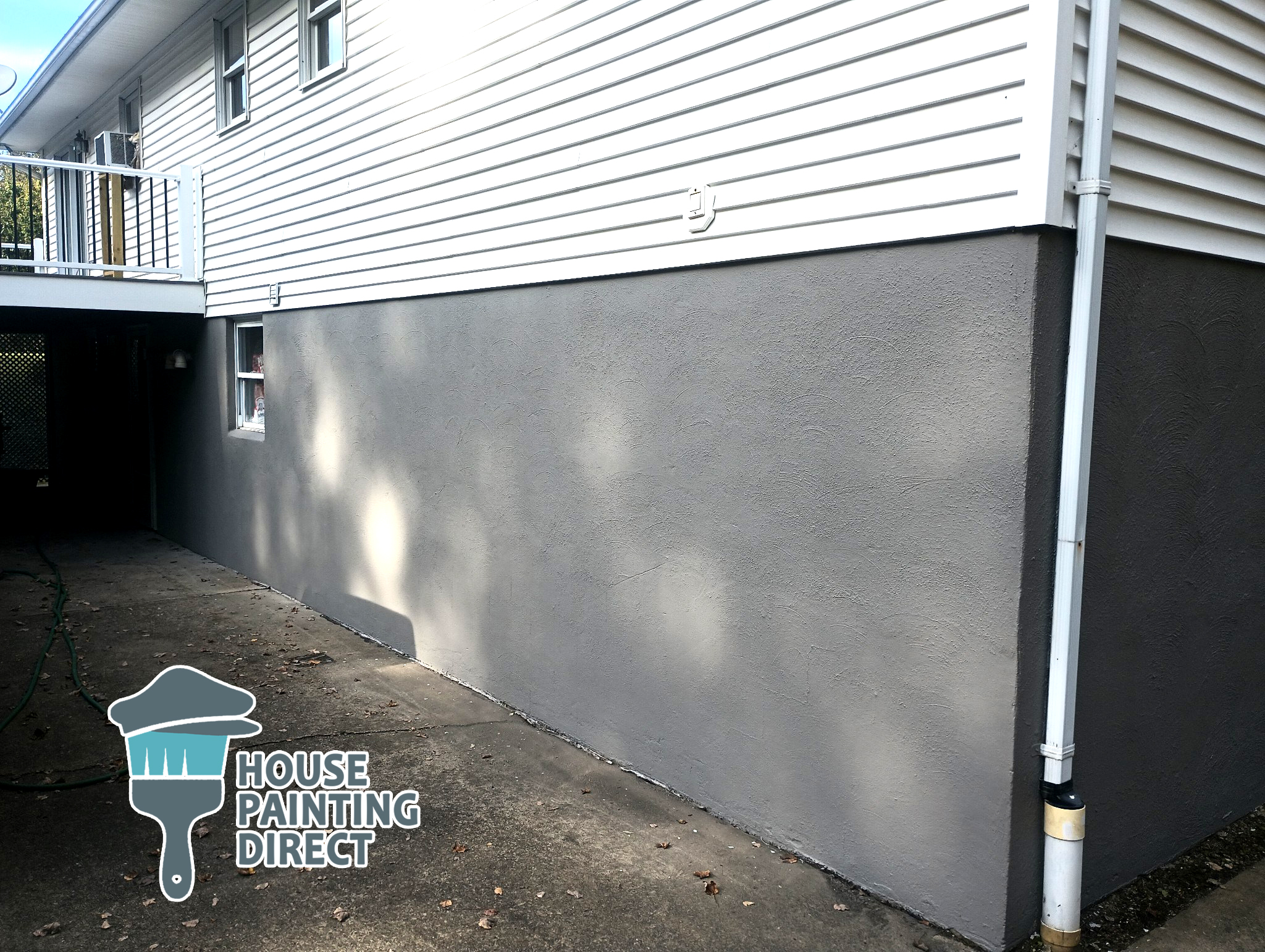
Stucco |
Durable, but sensitive to moisture issues |
Older homes around Wilkes-Barre often have wood siding or mixed materials, which naturally require more attention over time.
A Closer Look at Why Paint Breaks Down
It’s not just the weather—it’s how surfaces respond to it
Exterior paint forms a protective film. But that film is constantly expanding and contracting with temperature changes.
In NEPA:
-
Cold weather causes materials to contract
-
Heat and sun exposure cause expansion
-
Moisture works its way in and out of surfaces
Over time, this movement creates microscopic stress in the paint layer. Eventually, that stress leads to:
-
Loss of adhesion
-
Fine cracking
-
Gradual peeling
The better the prep and product, the longer that process takes—but it never fully stops.
A Real-World Moment Most Homeowners Recognize
You’re pulling into the driveway after a day out—maybe coming back from around Frances Slocum State Park—and something about the house looks slightly off.
Not bad. Just… a little duller than you remember.
That’s often the first sign. Not peeling. Not damage. Just a shift in how the finish reflects light.
It’s subtle, but it’s the beginning of that longer cycle.
A Straight Answer to a Common Question
“How long does exterior paint last in NEPA?”
In most cases, a well-prepared and properly applied exterior paint job lasts 6–10 years in Northeast Pennsylvania. However, homes with heavy sun exposure, moisture retention, or older siding may see wear closer to the 5–7 year range, while ideal conditions can stretch beyond 10 years.
Where Longevity Is Won or Lost
It’s not just about the paint itself. A few underlying factors tend to make the biggest difference:
- Surface preparation (cleaning, scraping, priming where needed)
- Quality of materials used
- Timing of the project relative to weather conditions
- Ongoing exposure (sun, moisture, airflow)
Paint doesn’t fail randomly—it reflects the conditions it was applied in and exposed to afterward.
Signs Your Paint Is Aging (Before It Fails)
Color fading or uneven tone
Often shows up first on sun-exposed sides. Protection may already be weakening even if the surface looks intact.
Chalky or dusty surface when touched
A sign the paint film is breaking down from UV exposure.
Minor cracking near trim or joints
Early indicator that expansion and contraction are stressing the coating.
It’s Less About the Exact Year—More About Reading the Surface
In a place like Wilkes-Barre, exterior paint isn’t on a strict schedule. It’s on a curve shaped by weather, materials, and how the home interacts with its surroundings.
Some homes need attention sooner. Others hold up longer.
But in almost every case, the signs show up early—long before major failure.
And catching those early shifts is what keeps a home looking sharp and protected, season after season.