
A Wilkes-Barre Homeowner’s Cold-Season Advantage
In Wilkes-Barre, winter doesn’t just arrive—it settles in. Between the river valley moisture, sudden cold snaps, and long stretches of overcast days, your home’s exterior takes on a different kind of stress compared to milder regions.
Drive down South Main Street or through the older neighborhoods near Franklin Street, and you’ll see it—paint that didn’t quite hold, trim that’s starting to separate, siding that looks just a bit more worn than it did in fall. Most of that damage didn’t start in winter. It was already there… winter just finished the job.
Preparing your exterior ahead of the season is less about “getting ready” and more about removing weak points before they’re exposed to months of pressure.
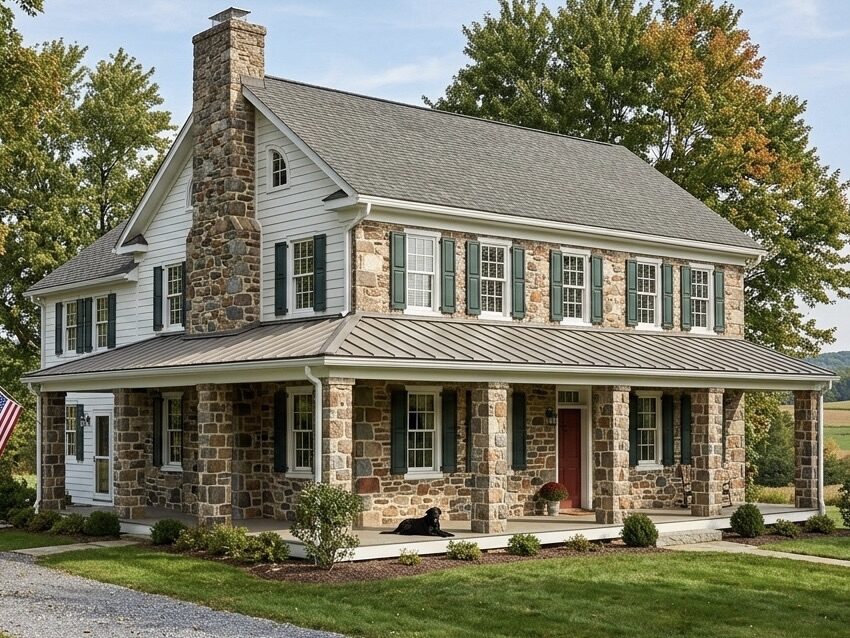
Where Winter Actually Starts: Hidden Moisture
In NEPA, moisture is rarely obvious. It sits in seams, behind trim, in small hairline cracks—especially after damp fall weather.
Once freezing temperatures hit, that moisture expands. Then contracts. Then expands again. Over and over.
This is where small issues become structural ones.
What that looks like in real terms:
- A tight paint film begins to fracture
- Caulking pulls away from joints
- Wood trim swells, then splits
- Water finds a path behind siding
It’s subtle at first. Then by late January, it’s not.
A Closer Look at Paint Failure (and Why It Speeds Up Now)
Paint failure in winter isn’t random—it follows a pattern tied to adhesion and flexibility.
The Cold-Weather Breakdown Point
When exterior paint loses elasticity (often due to age or UV exposure), it can no longer expand and contract with temperature shifts.
Here’s what happens next:
- Daytime thaw introduces slight expansion
- Nighttime freeze contracts the surface rapidly
- Brittle paint films can’t move with the substrate
- Microfractures form… then spread
Over time, this leads to peeling—not from the surface, but from beneath.
That’s why areas that looked “fine” in September can suddenly fail mid-winter.
The Areas Most Wilkes-Barre Homes Overlook
Walk around your home once—slowly—and you’ll start to notice the common weak points. These aren’t dramatic problem areas. They’re quiet ones.
- Window trim on the wind-facing side of the house
- Garage door frames exposed to runoff
- Fascia boards where gutters slightly overflow
- Lower siding edges near snow accumulation
Homes near the Susquehanna River tend to hold more ambient moisture, and older properties—especially around neighborhoods off North Washington Street—often have layered materials from past repairs. Those transitions are where failures usually begin.
Quick Reality Check: What’s Worth Addressing Before Winter?
| Condition | Leave It | Address Before Winter |
| Solid paint, minor fading | ✔ | |
| Small, stable caulk lines | ✔ | |
| Cracked or separating caulk | ✔ | |
| Exposed wood or bare spots | ✔ | |
| Peeling or bubbling paint | ✔ |
Think of it this way—if moisture can get in, winter will make sure it does something with it.
The Role of Drainage (More Than Just Gutters)
After a snowfall, as temperatures rise slightly during the day, water begins to move. Where that water goes—and where it sits—matters.
Improper drainage creates repeat exposure in the same areas:
- Water dripping onto siding edges
- Ice forming along trim lines
- Snowmelt refreezing in seams
If you’ve ever walked around your home near Public Square after a thaw and noticed icicles forming in the same spots repeatedly, that’s not random—it’s a drainage pattern. And it’s worth paying attention to.
A More Grounded Way to Think About It
This isn’t about over-preparing or chasing perfection.
It’s about walking around your home—maybe on a quiet afternoon after being up near the Back Mountain trails—and noticing what feels solid… and what doesn’t.
A tight corner. A clean edge. A sealed joint. Those are the things that hold up through a NEPA winter.
And the areas that feel just slightly off? Those are the ones winter tends to find first.
Closing Thought: Stability Over Perfection
In a place like Wilkes-Barre, your home doesn’t need to be flawless going into winter—but it does need to be sealed, stable, and protected where it counts.
Because once the cold sets in, the opportunity to fix things closes just as quickly as the temperature drops.
And whatever condition your exterior is in at that moment—that’s the version of your home that’s carrying you through until spring.